
SCERA project aims the development of a smart 3D ceramic nanostructure for the control and prevention of water contamination. This project is coordinated by researchers from IDAEA-CSIC (Chemometrics Group) and UPC (MNT group)
SCERA news

1 de febrero de 2025IDAEA press release: Innovative technology unveiled to prevent water microcontaminants and microplastics contamination (link)
The MRR-funded SCERA project technology was presented yesterday in a joint event organised by IDAEA-CSIC and the Polytechnic University of Catalonia (UPC) to introduce the ceramic devices as an innovative and sustainable tool in the water management area.
Water pollution has reached critical levels in urban areas. Conventional treatment methods struggle to cope with the sheer volume of urban discharges and waste. One of the most concerning contaminants is organic micropollutants, including pharmaceuticals, plasticizers, pesticides, flame retardants, and surfactants, which endanger the environment and human health. Another major concern is microplastics: tiny particles and their associated additives that flood the environment through wastewater treatment plant effluents, contaminating surface waters.
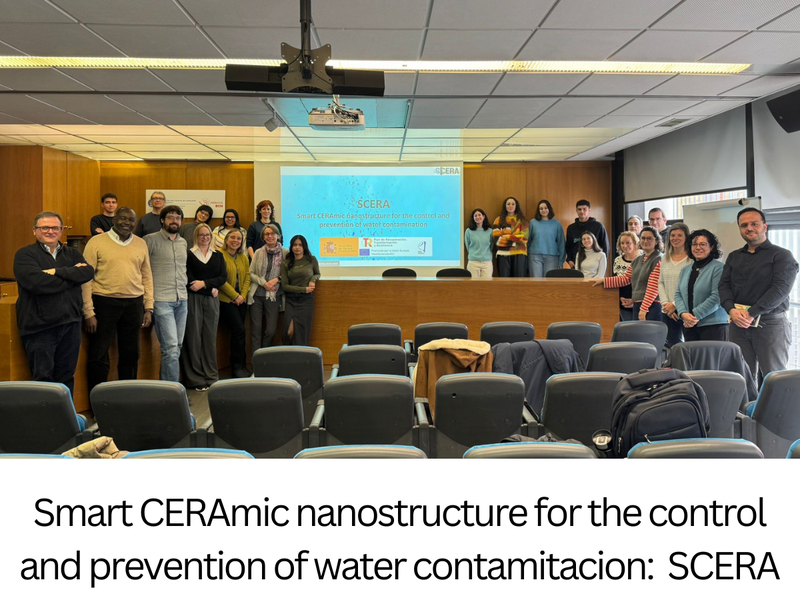
Members of the SCERA consortium gathered yesterday for the project presentation event. | Author: UPC
Ceramic membranes have emerged as a cost-effective and innovative technology to retain and eliminate contaminants from water sources. Developed within the EU-funded project SCERA (Smart CERAmic nanostructure for the control and prevention of water contamination), they are electronically controlled and possess exceptional qualities: mechanical strength, resistance, and the ability to operate under different conditions.
“The ceramic devices developed in the project are proving to be faster, cheaper, and more efficient for water treatments”, explains the IDAEA researcher and coordinator of the project Sílvia Lacorte.
The project is led by UPC researchers Sandra Bermejo and Ramón Bragós, together with IDAEA-CSIC researchers Sílvia Lacorte and Joaquim Jaumot. Apart from IDAEA-CSIC and UPC as coordinators, various institutions participated in the event to present the project, including: Aigües de Barcelona, the Catalan Water Agency (Agencia Catalana de l’Aigua, ACA), Acciona, ESADE and the Port of Barcelona. [...]
Read more...
29 de enero de 2025UPC press release: Presentació dels resultats del projecte SCERA (link)
El 23 de gener va tenir lloc el Workshop del projecte de col·laboració UPC-CSIC SCERA (Smart CERAmic nanostructure) per presentar els resultats i la tecnologia desenvolupada. Aquest treball ha estat liderat per les investigadores Sandra Bermejo (UPC) i Sílvia Lacorte (IDEAE-CSIC). En el projecte hi han participat per part de la UPC, els professors Ramón Bragós, Jorge Villar, Manuel Domínguez i Michelle Cedeño; i del CSIC, els investigadors Joaquim Jaumot i Stefan Platikanov.
SCERA proposa el disseny i l’aplicació d’un dispositiu ceràmic funcionalitzat intel·ligent, controlat electrònicament, per a la retenció, detecció, monitorització i eliminació in situ de micropol·lutants orgànics (OMP) i microplàstics (MP) presents a l’aigua.
A l’acte de presentació del projecte hi van assistir membres de diverses institucions i organitzacions, entre les que destaquen:
Universitat Politècnica de Catalunya (UPC)
Consejo Superior de Investigaciones Científicas (CSIC), amb representants dels grups IDAEA i Tech Transfer
Agència Catalana de l’Aigua (ACA)
Aigües de Barcelona
Acciona
ESADE
Port de Barcelona
Aquest projecte, finançat per l’Agencia Estatal de Investigación (AEI), representa una aposta clara per la innovació i la sostenibilitat en el camp del tractament i la gestió de l’aigua. [...]
Read more...
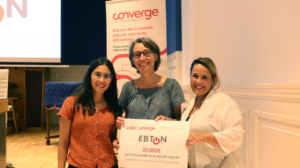
23 de mayo de 2024The Ceramic Passive Sampler (CPS) detects organic contaminants in water over time, allowing comprehensive assessment. Developed by the IDAEA researcher and coordinator of the SCERA Project, Sílvia Lacorte Bruguera, this passive device is versatile in its application because it doesn’t clog in rivers, drinking, underground, sewage, or marine waters.
The IDAEA researchers María Dulsat and Sílvia Lacorte Bruguera with their strategic mentor, Sandra Bofill
“The sampler provides accurate and reliable results, is economical, meets quality standards and is aligned with European directives for integrated water control”
Sílvia Lacorte
For more, see: https://www.idaea.csic.es/newspost/two-idaea-projects-awarded-in-the-csic-etbon-entrepreneurship-program [...]
Read more...
Institut of Environmental Assessment and Water Research, Chemometrics group
C/Jordi Girona 18-26, Barcelona 08034, Spain

Universitat Politècnica de Catalunya (UPC), Electronic Engineering Department, MNT Group
C/Jordi Girona 1-3, Barcelona 08034, Spain

Proyectos Estratégicos Orientados a la Transición Ecológica y a la Transición Digital» 2021
TED2021-131552B-C21 / TED2021-131552B-C22